The Ultimate Guide to Automotive Oscilloscope in the UK
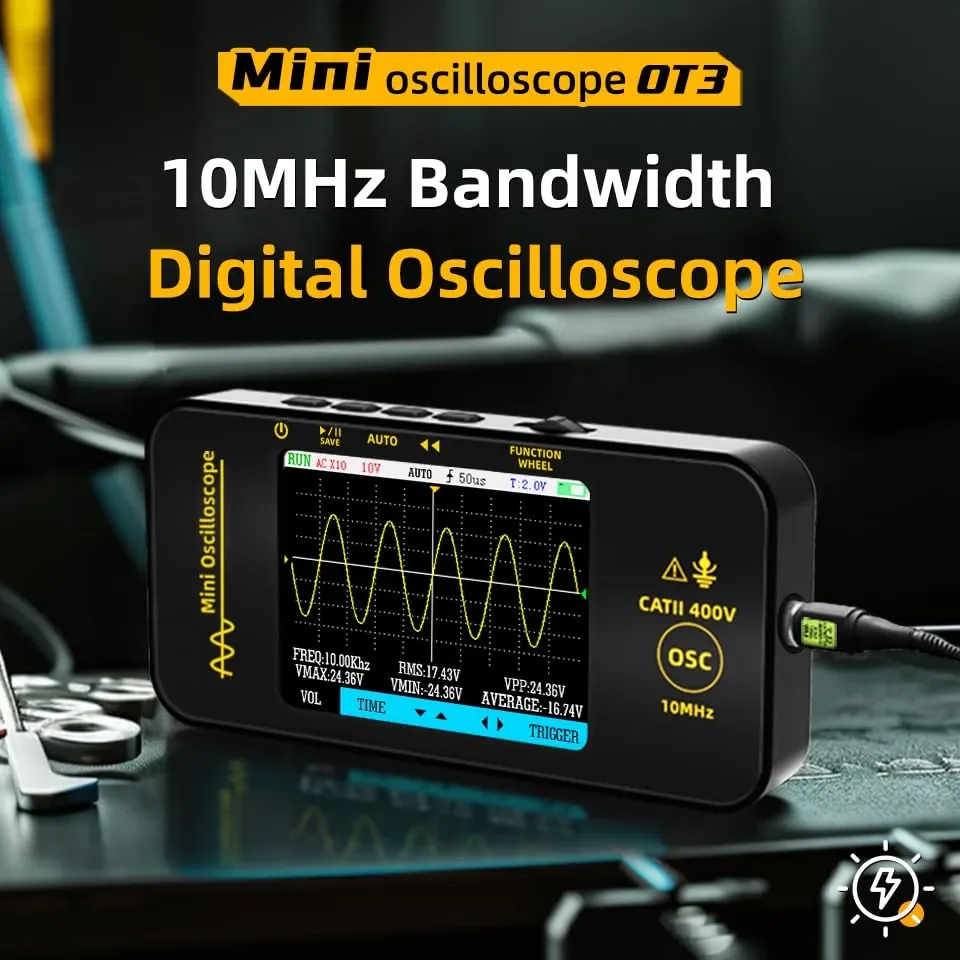
Modern vehicle diagnostics increasingly come down to one question: can you see what the circuit is actually doing in real time? A fault code reader can point you in a direction, and a multimeter can confirm voltage or resistance at a single moment, but neither shows the live waveform behaviour that often reveals the real problem. That is where an automotive oscilloscope earns its place in a UK workshop, mobile diagnostic van or home garage.
For technicians and enthusiasts working on everything from small petrol hatchbacks to diesel vans and hybrid systems, an oscilloscope turns hidden electrical activity into something visible and measurable. It helps diagnose intermittent faults, sensor issues, ignition problems, charging-system irregularities and communication anomalies that would otherwise waste hours of guesswork.
At Probeo, we see a growing demand for practical, portable test equipment that offers professional diagnostic capability without the cost, size and fragility of older bench-based systems. Our core approach reflects the same idea as our main site message: the ultimate portable cathode ray oscilloscope alternative. In plain terms, that means giving UK users a handheld digital oscilloscope that can visualise waveforms anywhere, with enough performance for real-world fault finding at a hobbyist-friendly price.
This guide explains what an automotive oscilloscope is, how it works, what you can test with it, what matters when buying one in the UK, and why portability matters more than many people first realise.
Key Takeaways
- An automotive oscilloscope shows live voltage changes over time, making it far more useful than a multimeter for intermittent and dynamic vehicle faults.
- It is commonly used to test crank and cam sensors, injectors, ignition events, charging systems, actuators and serial communication lines.
- For many UK users, a handheld digital model offers the best balance of portability, cost and diagnostic value.
- Bandwidth, sampling rate, input protection, ease of use and portability matter more than marketing claims alone.
- A portable 10MHz handheld oscilloscope is well suited to a large proportion of everyday automotive diagnostic work.
What is an automotive oscilloscope?
An automotive oscilloscope is a test instrument used to display electrical signals as waveforms over time. In vehicle diagnostics, this lets you see how sensors, actuators and control circuits behave while the car is running, cranking or under load.
Unlike a multimeter, which gives you a single reading averaged or sampled at one moment, an oscilloscope reveals the shape, timing, frequency and amplitude of a signal. That distinction matters because many vehicle faults are not static. A sensor may produce the correct average voltage but still generate a distorted waveform, drop out briefly, or become noisy under certain conditions.
In practical terms, if you want to understand whether a crankshaft sensor is producing a clean pulse train, whether an injector command is present, or whether an alternator ripple problem is upsetting the system, an automotive oscilloscope is the right tool.
Why an automotive oscilloscope matters more on modern UK vehicles
Vehicle electrical systems have become significantly more complex over the last two decades. UK roads now contain a wide mix of petrol, diesel, mild hybrid, full hybrid and battery electric vehicles, each with increasing sensor density and electronic control.
The Society of Motor Manufacturers and Traders reported that battery electric vehicle registrations in the UK reached 314,687 in 2024, with hybrids and plug-in hybrids also holding substantial market share, underlining how electronically dependent the parc has become (Source: SMMT UK new car registration data). Even where high-voltage systems require specialist training and safety procedures, the wider low-voltage diagnostic environment around these vehicles still relies heavily on waveform analysis.
For workshops, roadside technicians and serious DIY users, this means faults are less likely to be solved by swapping parts based on a code description alone. A fault code may say “circuit range/performance”, but the oscilloscope shows whether the issue is a missing signal, a distorted signal, poor synchronisation, low supply voltage or electrical interference.
That is also why a portable scope has become more attractive in the UK market. Many technicians work across forecourts, mobile call-outs, auction sites, farm vehicles, driveway repairs and shared workshops where a bulky bench instrument is impractical.
How an automotive oscilloscope works
An oscilloscope measures voltage and plots it on a screen against time. The vertical axis represents voltage. The horizontal axis represents time. As the input signal changes, the display draws the waveform.
From that one display, you can evaluate several diagnostic clues at once:
- Amplitude – how high or low the voltage goes
- Frequency – how often the pattern repeats
- Pulse width – how long a signal remains high or low
- Duty cycle – the proportion of on-time to off-time
- Noise – unwanted interference or irregularity
- Timing – whether one event occurs when it should relative to another
In automotive diagnosis, this is useful because many circuits are event-based rather than steady-state. An injector does not supply a constant output. A crank sensor generates pulses. An ignition primary waveform contains a firing event, burn time and oscillations. A good scope makes these patterns visible in seconds.
Automotive oscilloscope vs multimeter
A multimeter is still essential, but it answers different questions. If you need to check battery voltage, continuity, static resistance or current draw, a meter is often the first tool to reach for. If you need to understand a changing signal or intermittent event, the oscilloscope is usually the better instrument.
What a multimeter does well
- Battery and charging voltage checks
- Continuity testing
- Resistance measurement
- Current draw with the right accessories
- Quick go or no-go tests
What an automotive oscilloscope does better
- Sensor waveform analysis
- Intermittent fault capture
- Injector and ignition pattern testing
- Cam/crank correlation checks
- Ripple and noise detection
- Timing comparison between channels
If a workshop relies only on a code reader and multimeter, it can still diagnose many faults. But the more elusive the problem, the more likely it is that waveform analysis will save time, avoid unnecessary parts replacement and improve confidence in the repair.
Common automotive tests performed with an oscilloscope
Crankshaft and camshaft sensors
Crank and cam sensors are among the most common uses for an automotive oscilloscope. A healthy signal should be clean, repeatable and correctly timed. A weak magnetic pickup, damaged reluctor wheel, wiring issue or electrical noise can produce symptoms such as non-starting, misfires or stalling.
With a scope, you can see whether the waveform amplitude is adequate during cranking and whether the pattern remains stable when the engine warms up.
Ignition primary waveforms
Primary ignition testing helps identify coil behaviour, dwell control and firing events. A waveform can reveal whether a coil is being saturated properly, whether a driver circuit is operating, and whether there may be a secondary-side issue affecting the event.
This is particularly helpful when a vehicle has a misfire under load but no immediately obvious component failure.
Injector signals
An oscilloscope can show injector command pulses, pulse width changes and switching behaviour. If an engine runs lean, misfires at idle or shows cylinder imbalance, looking at the injector waveform can quickly separate a control issue from a mechanical fuel-delivery problem.
Alternator ripple
Charging systems do not just need to produce voltage; they need to produce clean voltage. A failing diode can create excessive ripple, leading to battery warning lights, electrical glitches or sensor disturbances. A scope makes ripple visible in a way a basic meter often cannot.
Throttle position and pressure sensors
Analogue sensors such as throttle position sensors or certain pressure transducers should produce smooth voltage changes. Flat spots, dropouts or noisy traces can indicate wear, contamination or wiring faults.
CAN and other communication lines
While full protocol decoding is a more advanced topic, even a basic oscilloscope can help confirm whether network lines are active and whether the signal levels appear plausible. For technicians investigating communication faults, this can be a useful first step before more advanced bus analysis.
Who should buy an automotive oscilloscope in the UK?
The short answer is broader than many people assume. You do not need to run a large franchised workshop to justify one.
Independent garages
Independent garages regularly face difficult faults on mixed-age vehicles from multiple manufacturers. A portable oscilloscope reduces reliance on guesswork and can shorten diagnostic time on drivability and electrical complaints.
Mobile mechanics
For mobile technicians, portability is essential. Carrying a bench instrument into a customer’s driveway is rarely realistic. A handheld digital oscilloscope is easier to store, quicker to deploy and more suited to working around a live engine bay in changing weather conditions.
Advanced DIY enthusiasts
Enthusiasts restoring, maintaining or modifying vehicles can benefit enormously from waveform analysis. It is particularly useful when working on older British cars with ignition and charging quirks, as well as newer cars where sensor diagnostics go beyond traditional test lamp methods.
Training environments
Colleges, apprentices and workshop trainees can use an automotive oscilloscope to build real diagnostic understanding. Seeing a waveform develop on screen is often more instructive than reading a component description in a manual.
What to look for when buying an automotive oscilloscope
Not every scope marketed for workshop use offers good value. Some are over-specified for common tasks, while others are too limited or awkward to use. The best choice depends on the work you actually do.
Bandwidth
Bandwidth determines the range of frequencies the oscilloscope can accurately display. For many everyday automotive tasks, a 10MHz handheld digital oscilloscope is sufficient. It covers a broad range of practical testing on sensors, actuators, charging systems and general electrical diagnostics.
For highly specialised high-speed analysis, more bandwidth may be useful, but many UK users buying their first automotive oscilloscope are better served by a dependable, portable model they will actually use regularly.
Sampling rate
Sampling rate affects how accurately the waveform is reconstructed. A higher rate captures more detail. This matters when looking at fast transitions and short-duration events. In real use, adequate sampling combined with clear display scaling is more important than headline numbers alone.
Portability
Portability is not a luxury in automotive work. It directly affects whether the tool gets used. A handheld unit can go to the vehicle, rather than forcing the vehicle and technician into an ideal test environment that rarely exists. That matters in tight garages, roadside jobs and outdoor conditions common across the UK.
Display clarity
A waveform is only useful if you can read it easily. A clear screen, practical controls and sensible scaling make diagnosis faster. Complicated menu systems and poor visibility can make even capable hardware frustrating in the workshop.
Ease of use
The best automotive oscilloscope is one that encourages regular use. If setup is too fiddly, many users default back to the multimeter. A straightforward interface lowers the barrier and helps hobbyists and professionals build confidence more quickly.
Durability
Automotive environments are harsh. Tools get moved, dropped, used near heat and exposed to dirt. A compact digital scope designed for practical use often makes more sense than a delicate bench unit in this setting.
Value for money
Many buyers do not need a large investment to gain meaningful diagnostic capability. Probeo’s positioning speaks directly to this need: professional diagnostics at a hobbyist price. That matters in the UK market, where smaller garages and individuals often want a sensible route into scope testing without the cost of a premium lab setup.
Why portability matters in real automotive diagnostics
Bench oscilloscopes have their place, especially in electronics labs. But vehicle diagnostics is rarely done at a fixed bench with ideal lighting, clean worktops and unrestricted access. Real-world automotive diagnosis happens leaning over engine bays, crouched in footwells, standing in car parks and working around moving components.
This is why the shift from traditional cathode ray units to compact digital handheld devices is so important. A portable oscilloscope can be carried to the fault, powered conveniently, positioned safely and used without monopolising workshop space.
Probeo’s product philosophy fits this modern use case. A handheld digital unit is the practical successor to the old cathode ray oscilloscope idea: the same core goal of visualising waveforms, but with far greater convenience for field work, home garages and compact workspaces.
For many UK buyers, this is not just about comfort. It is about making advanced diagnostics realistically accessible. If a tool is too expensive, too bulky or too specialist, it often remains on the shelf. A portable option is more likely to become part of everyday diagnostic routine.
Is a 10MHz handheld oscilloscope enough for automotive work?
For a large proportion of automotive diagnostic tasks, yes. This is one of the most common buying questions, and it is worth answering plainly.
A 10MHz handheld digital oscilloscope is well suited to many routine and intermediate jobs, including:
- Checking crank and cam sensor activity
- Viewing injector command pulses
- Inspecting ignition primary events
- Measuring alternator ripple
- Observing sensor voltage changes
- Investigating intermittent low-voltage electrical faults
Where higher-spec instruments come into their own is in more advanced high-speed analysis, deep serial decoding or specialist R&D-style work. That does not describe the majority of workshop jobs. Most users need a dependable, portable oscilloscope that is quick to deploy and capable across common fault-finding scenarios.
That is why a 10MHz handheld model remains a sensible choice for independent garages, mobile mechanics, trainees and enthusiasts in the UK.
Automotive oscilloscope buying considerations for the UK market
Vehicle mix on British roads
UK technicians often work on a very mixed vehicle parc: compact city cars, diesel vans, fleet vehicles, older petrol models, premium German brands and an increasing number of hybrids and EVs. A general-purpose portable scope suits this diversity well because it can move easily between jobs and locations.
Workshop space constraints
Many independent workshops in Britain operate in tight spaces where every bench and trolley matters. A handheld oscilloscope takes up less room and is easier to store than larger bench equipment.
Outdoor and mobile work
British weather is not always kind to roadside diagnostics. A compact tool that can be set up quickly and handled easily matters when you are working in a driveway or under time pressure.
Regulated environments and safety awareness
If you work around modern hybrid or electric vehicles, follow UK safety guidance and manufacturer procedures. Low-voltage diagnostics with an oscilloscope remain useful, but high-voltage systems require appropriate competence, PPE and safe isolation practices. This is particularly relevant for fleet, local authority and healthcare support vehicles, including NHS-adjacent transport operations where uptime and safe repair standards are critical.
How to start using an automotive oscilloscope with confidence
One reason some buyers hesitate is the belief that oscilloscopes are too advanced. In truth, the learning curve is manageable if you focus on common tests first.
Start with known-good patterns
Begin by testing healthy vehicles and saving or noting the waveforms. This creates a baseline. Once you know what normal looks like, faults become easier to spot.
Learn the basics of time and voltage scaling
Most early frustration comes from display setup rather than the signal itself. Spend time adjusting the time base and voltage scale so the waveform fills the screen sensibly.
Focus on a few common jobs
Good starter tasks include alternator ripple, crank sensor signals, injector pulses and throttle position sensor sweeps. These quickly demonstrate the practical value of the tool.
Use the scope alongside other tools
An automotive oscilloscope is not a replacement for scan tools, multimeters or service data. It works best as part of a structured diagnostic process. Fault codes suggest where to look. Wiring diagrams show what should happen. The oscilloscope confirms what is actually happening.
Common mistakes when using an automotive oscilloscope
- Using the wrong time scale – the waveform may appear meaningless if the display window is too wide or too narrow.
- Expecting one perfect pattern for every vehicle – normal waveforms vary by design.
- Ignoring battery and ground quality – poor supply conditions can distort results.
- Relying on fault codes alone – a code can identify a symptom, not necessarily the root cause.
- Buying for specification sheets rather than use case – workshop practicality often matters more than chasing maximum figures.
A good handheld oscilloscope reduces some of these barriers by making setup quicker and field use easier, but technique still matters. The more often you use it, the more intuitive waveform interpretation becomes.
Probeo’s place in the automotive oscilloscope market
Probeo’s positioning is clear and relevant to what many UK buyers actually need: a portable digital alternative to older cathode ray oscilloscope formats, with enough capability for meaningful diagnostics and a price point that does not put the tool out of reach.
That combination matters because automotive waveform testing should not be reserved only for large diagnostic specialists. Independent garages, home users and mobile technicians also benefit from seeing electrical behaviour clearly. A handheld 10MHz digital oscilloscope is a practical route into that level of diagnosis.
Rather than pushing complexity for its own sake, the stronger case is usability. If a scope is portable, readable and affordable, it is far more likely to be used consistently. That is where genuine diagnostic value is created.
Further reading on automotive and oscilloscope buying
If you want to compare broader buying considerations, you may also find these guides useful:
- Oscilloscope Automotive Explained: A UK Buyer's Guide
- Keysight Technologies Oscilloscope Explained: A UK Buyer's Guide
- Keysight Oscilloscopes Explained: A UK Buyer's Guide
These articles can help if you are comparing terminology, use cases and different scope categories before deciding what best suits your work.
How to choose the right automotive oscilloscope for your needs
If you are still narrowing down your options, this simple decision framework helps.
- List your main jobs: sensors, ignition, injectors, charging, intermittent faults.
- Decide where you work: fixed workshop, mobile van, driveway, training space.
- Prioritise portability if you move between vehicles.
- Choose practical performance over inflated specs.
- Buy a model you will actually use often.
For many UK buyers, that points towards a handheld digital oscilloscope with enough bandwidth for core automotive testing, a clear display and sensible pricing. That is exactly the gap Probeo is designed to serve.
Call to action: explore Probeo’s portable oscilloscope
If you want a more practical way to diagnose vehicle electrical faults, a portable digital scope is one of the most useful upgrades you can make to your toolkit. Probeo is built around a straightforward promise: visualise waveforms anywhere with our 10MHz handheld digital oscilloscope, giving you professional diagnostic capability at a hobbyist price.
Whether you run an independent garage, work as a mobile mechanic or want better visibility into your own vehicle projects, a compact handheld unit makes waveform testing far more accessible.
View the Probeo product range and learn more about our portable oscilloscope solution.
Frequently Asked Questions
What is the main advantage of an automotive oscilloscope over a multimeter?
The main advantage is that an automotive oscilloscope shows how voltage changes over time. This allows you to see live waveforms, timing issues, intermittent faults and signal distortions that a multimeter usually cannot display.
Is a handheld oscilloscope good enough for car diagnostics?
Yes, for many common diagnostic tasks a handheld oscilloscope is more than good enough. It is especially useful for crank and cam sensors, injector signals, ignition primary testing and alternator ripple checks. Portability also makes it more practical in real workshop and mobile environments.
What bandwidth do I need for an automotive oscilloscope?
For a large amount of everyday automotive work, a 10MHz handheld digital oscilloscope is a sensible and capable choice. It covers many standard diagnostic tests without the added cost and complexity of higher-end instruments designed for more specialised applications.
Can beginners use an automotive oscilloscope?
Yes. Beginners can start with straightforward tests such as battery ripple, basic sensor outputs and injector pulses. The key is to learn time scale and voltage scale adjustment, compare against known-good patterns and build confidence gradually through repeated use.
Ready to upgrade your bench with Probeo?
Shop Now — £103.69